
Vaping 95% Less Harmful: Stunning Truth from Public Health England
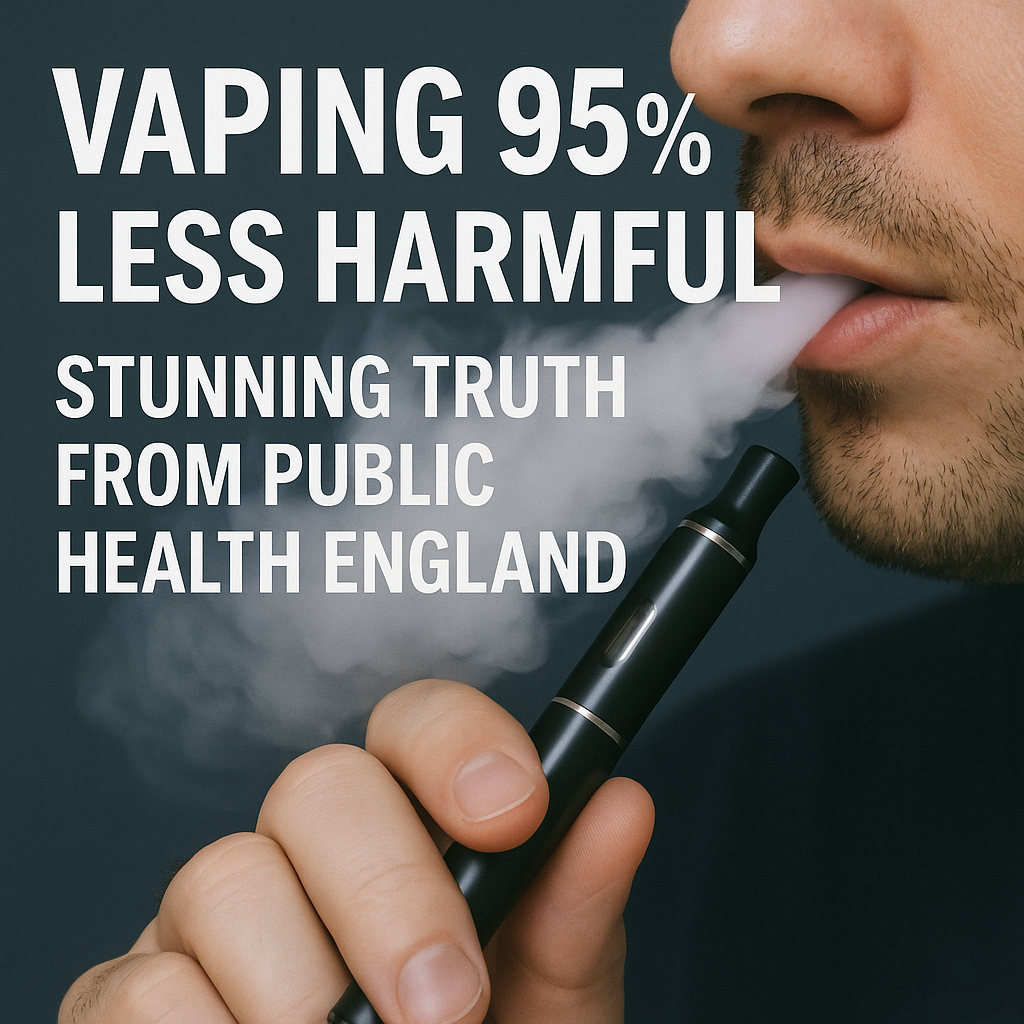
Public Health England reveals that vaping is 95% less harmful than smoking, offering a powerful new perspective for smokers looking to reduce health risks without giving up nicotine completely. This stunning truth reshapes how we think about tobacco harm reduction and opens doors to safer alternatives.
Vaping 95% Less Harmful: Stunning Truth from Public Health England
Vaping is 95% less harmful than smoking, a striking conclusion drawn by Public Health England (PHE) that has reshaped the conversation around tobacco harm reduction. This revelation challenges long-standing perceptions about e-cigarettes and offers a promising alternative for smokers seeking a safer way to satisfy nicotine cravings without the devastating health consequences of traditional cigarettes.
Understanding the 95% Less Harmful Claim
Public Health England’s assertion is based on a comprehensive review of scientific evidence comparing the risks of vaping to smoking combustible tobacco. Unlike cigarettes, which produce thousands of harmful chemicals through combustion, e-cigarettes vaporize a liquid solution containing nicotine, flavorings, and other additives. This process eliminates many toxic substances responsible for cancer, respiratory diseases, and cardiovascular problems.
The 95% reduction in harm does not imply vaping is completely safe, but it highlights a significant decrease in exposure to dangerous toxins. For smokers who find quitting nicotine altogether difficult, switching to vaping represents a substantial improvement in health outcomes.
How Public Health England’s Findings Impact Smokers
The findings from PHE provide a critical public health message: smokers who switch entirely to vaping can drastically reduce their risk of smoking-related diseases. This is particularly important given that smoking remains one of the leading causes of preventable death worldwide.
By promoting vaping as a harm reduction tool, health authorities encourage smokers to transition away from cigarettes rather than continuing to struggle with cessation methods that may not work for everyone. The evidence suggests that vaping can serve as a gateway out of smoking, offering nicotine satisfaction without the lethal side effects of tar and carbon monoxide.
Addressing Common Misconceptions About Vaping
Despite the positive evidence, vaping still faces skepticism and misinformation. Some believe that vaping could be just as harmful as smoking or that it serves as a gateway to tobacco use for youth. However, Public Health England’s review and subsequent studies have found no evidence that vaping is a significant risk factor for non-smokers or young people starting nicotine use.
Moreover, the relative safety of vaping compared to smoking is clear: the absence of combustion means far fewer carcinogens and toxins are inhaled. While long-term studies are ongoing, current data supports the idea that vaping is a safer alternative for adult smokers.
The Role of Regulation and Education
To maximize the benefits of vaping as a harm reduction strategy, appropriate regulation and public education are essential. Governments and health organizations must ensure that vaping products meet safety standards and that marketing does not target non-smokers or minors.
Public Health England’s stance helps shift the narrative toward science-based policies that prioritize reducing smoking-related harm. Encouraging smokers to switch to vaping, while continuing to monitor and regulate the industry, can save lives and reduce healthcare burdens associated with tobacco use.
Conclusion
The stunning truth from Public Health England that vaping is 95% less harmful than smoking offers hope in the fight against tobacco-related illness and death. While not risk-free, vaping provides a significantly safer alternative for smokers who struggle to quit. By embracing evidence-based harm reduction strategies, society can make meaningful progress toward reducing the devastating impact of smoking on public health.